Contents 8 sections
- The homemade protein bar recipe without whey (8 bars, no baking)
- The nutrition figures for one whey-free bar
- Where does the protein come from when you skip the whey
- Is whey essential in high-protein recipes
- When should you eat these protein bars
- Homemade bars or shop-bought: how to choose
- Our verdict on this whey-free bar
- Frequently asked questions
Summarise this article with:
💡 The essentials
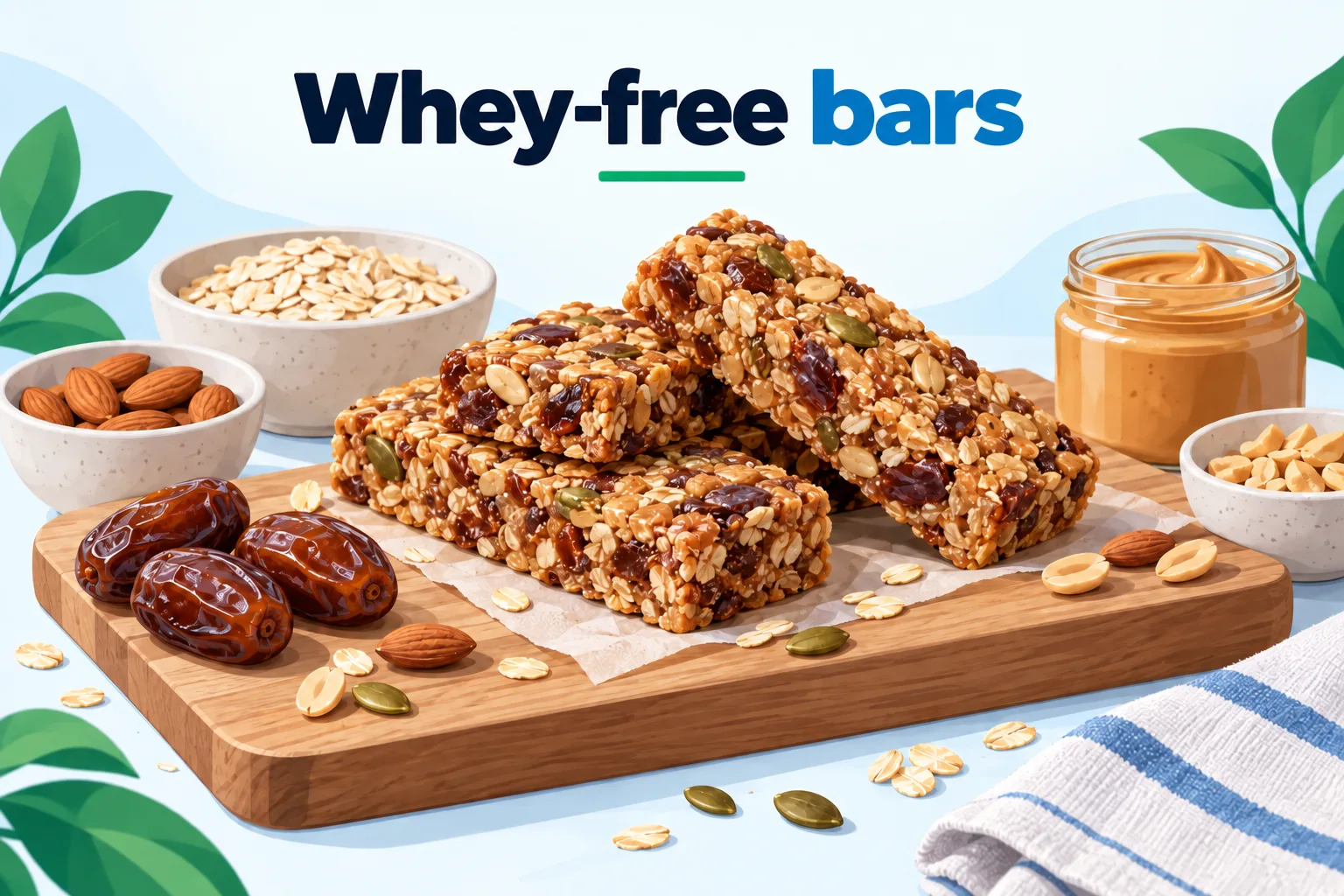
Yes, you can make good protein bars without whey: rolled oats, seeds, cashews and peanut butter, bound together with banana, no baking required.
- With no powder at all: about 6.5 g of protein and 216 kcal per bar (8 bars).
- With 40 g of plant protein powder: about 10.5 g of protein per bar.
- Dairy-free: made with a plant drink, the recipe suits anyone who is lactose intolerant.
No whey in the cupboard, a lactose intolerance, or simply a craving for a 100% plant-based snack? These homemade protein bars without whey take 15 minutes to put together, with no oven, using supermarket ingredients. The fridge does the rest.
We converted the old recipe into grams and recalculated its nutrition figures: with no protein powder, a homemade bar is a moderately high-protein snack. So we are also giving you a version boosted with plant protein, and the honest numbers for both.
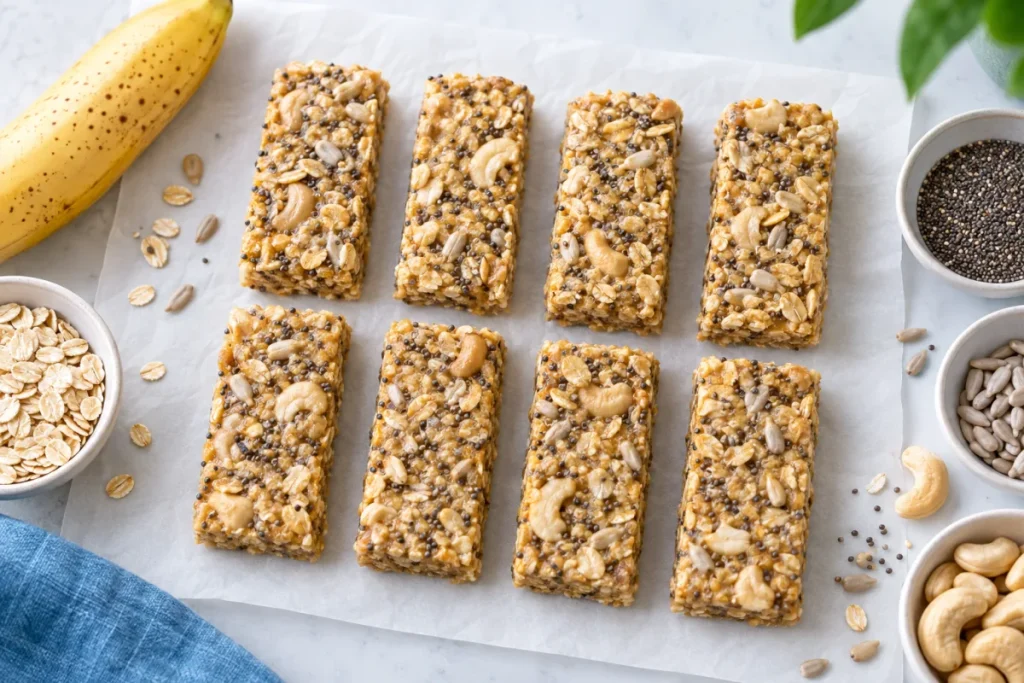
🍳 The homemade protein bar recipe without whey (8 bars, no baking)
Ingredients and kit
- 100 g rolled oats
- 60 g unsalted sunflower seeds
- 30 g chia seeds
- 60 g unsalted cashews, roughly chopped
- 40 g peanut butter (or almond butter)
- 1 very ripe banana (about 120 g peeled), mashed
- 80 ml plain soya drink (or another plant drink)
- 20 g honey or agave syrup (for a vegan version)
- 1 pinch of salt
- Higher-protein option: 40 g plant protein powder (soya, pea, or a pea and rice blend)
- Kit: a mixing bowl, a fork, a square tin of about 20 x 20 cm, and baking parchment
The method, step by step
- Mix the dry ingredients in the bowl: rolled oats, sunflower seeds, chia seeds, cashews, salt, and the plant protein if you are using it.
- Mash the banana with a fork, then add the peanut butter, the plant drink and the honey. Mix until you have a smooth cream.
- Pour the cream over the dry ingredients and stir until you get a thick dough. With the protein powder in, add a splash more plant drink if the dough feels too dry.
- Leave it to stand for 10 minutes: the chia seeds soak up the liquid and bind the dough.
- Spread it out and press it down firmly in the tin, lined with baking parchment.
- Chill in the fridge for at least 1 hour, until the mixture is firm, then cut into 8 bars.
📊 The nutrition figures for one whey-free bar
With no powder, one bar brings around 6.5 g of protein; with 40 g of soya protein, you climb to around 10.5 g. The older version of this article claimed 10 g of protein and 150 kcal for the powder-free recipe: working it out ingredient by ingredient confirms neither figure.
| Per bar (1/8) | Without powder | With 40 g of soya protein |
|---|---|---|
| Energy | around 216 kcal | around 236 kcal |
| Protein | around 6.5 g | around 10.5 g |
| Carbohydrate | around 16 g | around 16 g |
| Fat (of which saturates) | around 12.7 g (1.9 g) | around 12.8 g (1.9 g) |
| Fibre | around 4.5 g | around 4.8 g |
🔬 Our method
Every figure comes from the 2025 Ciqual food composition table published by ANSES, the French food safety agency (in French), ingredient by ingredient, then divided by 8. We used the entries for rolled oats, sunflower seeds, dried chia seeds, unsalted roasted cashews, peanut butter, raw banana, plain soya drink, honey and, for the boosted version, soya protein powder (80.5 g of protein per 100 g in Ciqual).
These numbers are calculations, not laboratory analyses. Sugars are not shown because Ciqual does not record that value for chia seeds. A shop-bought pea protein will give you a similar result: check the protein content on its own label.
🌱 Where does the protein come from when you skip the whey?
In this bar, the protein comes from the seeds, the nuts and the oats. ANSES names exactly those foods, oilseeds, pulses and cereals (in French), as the main sources of plant protein, and points out that the nutritional reference value for healthy adults is 0.83 g of protein per kilo of body weight per day.
There is no need to pair cereals and pulses cleverly at every single meal: according to the same ANSES page, diets in France are varied enough that systematic pairing is not necessary. For other whey-free options (casein, egg, soya, pea), read our guide to whey protein alternatives.
🥛 Is whey essential in high-protein recipes?
No, whey is not essential: it simply makes the bar higher in protein for fewer calories. Whey is a milk protein, the part left over from cheesemaking, and it is very high in protein once it has been isolated. If you tolerate it, our whey protein bar recipe reaches around 13 g of protein per bar.
 Read nextWhey Protein Bar Recipe
If you do cook with whey, pick an isolate, which is more concentrated in protein. Nutripure sells one, and our round-up of the best whey proteins will help you place it against the other brands. To take a look at it, click the button below:
🕒 When should you eat these protein bars?
These bars work at any time of day: as a snack, at teatime, or before or after training. The International Society of Sports Nutrition (ISSN) recommends aiming for 20 to 40 g of protein per serving, every 3 to 4 hours, so a bar carrying 6.5 to 10.5 g tops up a snack rather than replacing one.
After a session, pair it with another protein source, a soya yoghurt for instance, or a protein shake without whey. And bear in mind that a bar, homemade or not, sits on top of a varied diet: it does not stand in for a meal.
As for keeping them, store them in the fridge in an airtight container and eat them within 5 days, exactly as the original recipe already said: the fresh banana makes them more fragile than a baked bar.
⚖️ Homemade bars or shop-bought: how to choose
If you are buying ready-made bars, read the label before the slogan. Here are the benchmarks we use for a shop-bought protein bar:
- Protein: at least 10 g per bar, otherwise it is just a snack.
- Sugars: under 5 g per bar, while checking what has replaced them (sweeteners, polyols such as maltitol).
- Fibre: at least 3 g per bar.
- Ingredients list: as short and as readable as possible.
Our homemade bar without powder ticks the fibre and ingredients boxes, but not the protein one; the plant protein version clears the 10 g bar. The table sums up the three options.
| Criterion | Homemade, no powder | Homemade + plant protein | Shop-bought protein bar |
|---|---|---|---|
| Protein per bar | ★★☆☆☆ | ★★★☆☆ | ★★★★★ |
| Simple ingredients | ★★★★★ | ★★★★☆ | ★★☆☆☆ |
| Fibre | ★★★★☆ | ★★★★☆ | ★★★★☆ |
| Keeping time | ★★☆☆☆ | ★★☆☆☆ | ★★★★★ |
| Suits a dairy-free diet | ★★★★★ | ★★★★★ | ★★☆☆☆ |
And if you do tolerate dairy, whey remains the simplest way to lift the protein in your homemade recipes. Click the button below and type “whey” in the shop’s search bar:
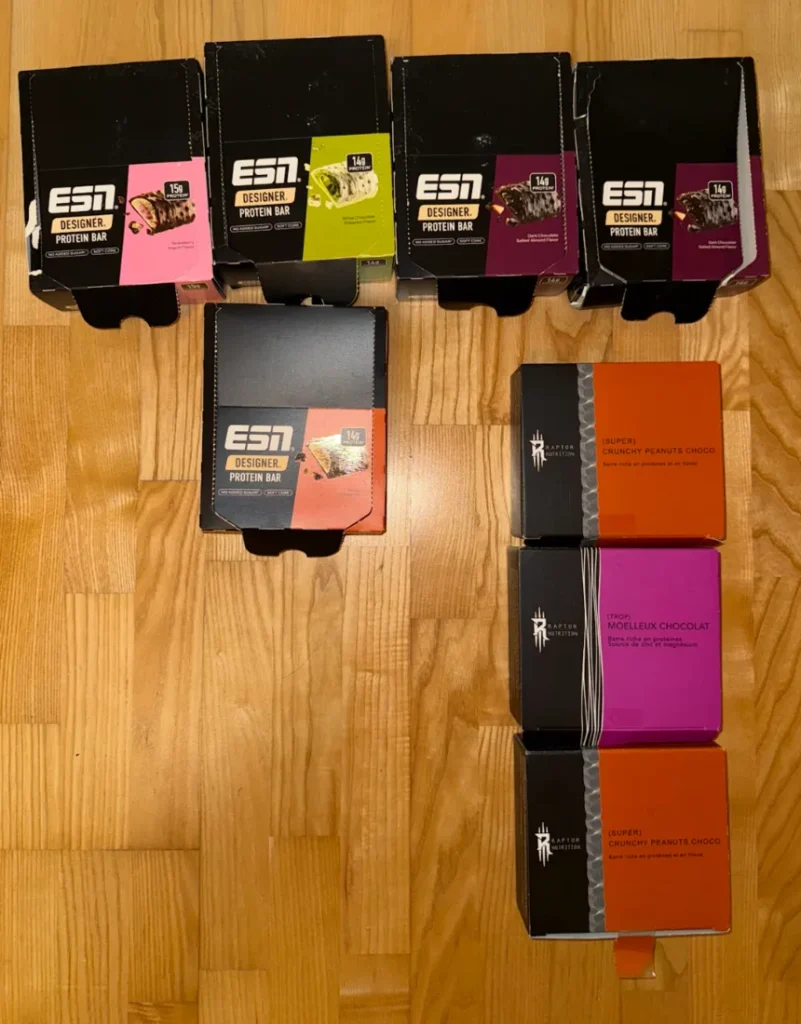
Would you rather buy them ready-made? Have a read of this Raptor Nutrition review (in French) published by a friendly site.
🎯 Our verdict on this whey-free bar
It is an excellent snack bar, filling and high in fibre, but without the powder it is not a “high-protein” bar. We would recommend it to anyone who is lactose intolerant, to people eating plant-based and to anyone who wants a homemade snack with no oven involved; add the plant protein if muscle gain is your goal.
It is not for you if you are after 15 to 20 g of protein per bar, if you want bars that survive several days out of the fridge in a gym bag, or if you are allergic to nuts, peanuts or soya. More whey-free ideas are waiting in our protein crepes without whey.
Here is another one of our whey-free recipes:
 Read nextProtein pancakes without whey: the recipe
⚠️ Watch out
This bar contains nuts, peanuts and soya. If you are choosing it because of a lactose intolerance, note that the French national health service (in French) advises adapting dairy products to your own tolerance rather than cutting them all out. If you have an allergy (milk, nuts, peanuts, soya), kidney disease or are pregnant, ask your doctor before changing your protein intake.
❓ Frequently asked questions
What can you use instead of whey in a protein bar?
A plant protein powder (soya, pea, or a pea and rice blend), gram for gram. If the dough turns dry, add a little plant drink, a spoonful at a time.
Can you make protein bars with no powder at all?
Yes, but they will only be moderately high in protein. With nothing but seeds, nuts and oats, our calculation gives around 6.5 g of protein per bar: a good snack, not a full protein serving.
How long do no-bake homemade protein bars keep?
About 5 days in the fridge, in an airtight container. The fresh banana makes them more fragile than baked bars; to make a batch ahead, freeze them wrapped one by one.
Are these bars vegan?
Yes, as long as you swap the honey for agave syrup. Every other ingredient is plant-based, including the protein powder if you go for soya or pea.