Contents 7 sections
What is your main goal?
How do you digest dairy?
What matters most to you?
Summarise this article with:
💡 The essentials
The best whey protein in October 2026 is still, for us, Nutripure’s Whey Isolate Native: 86.8 g of protein per 100 g as sold (94% on a dry-matter basis), an ingredient list cut back to isolate and sunflower lecithin in the unflavoured version, under 0.2% lactose, and around €47 a kilo.
- The richest in protein: Nutri&Co (92 g per 100 g), but around €67 a kilo.
- The simplest: AM Nutrition unflavoured, 100% isolate, with no additives at all.
- The smallest budget: Scitec Nutrition and MyProtein, between €33 and €38 a kilo, with less protein and more sweeteners.
There are hundreds of wheys out there and almost every one of them calls itself “the best”. To settle it, we compared nine products sold in France using their official product sheets: protein per 100 g as sold, calories, additives, lactose and price per kilo. This ranking is the hub of our comparisons: if you have a specific goal, the profile guides further down go into more depth.
🏆 The best whey proteins of 2026, ranked
🔬 Our method
We do not run laboratory analyses: we compared the labels and the official product sheets of each brand, consulted in October 2026. Four criteria: protein per 100 g as sold (using the 6.25 factor required by European labelling rules), the additive list, declared lactose and the price per kilo on the most common pack size. The dose recommendations rest on the ISSN position stand and on the opinions of EFSA and ANSES, the French food safety agency. Partner brands get no extra stars.
| Product | Type | Protein/100 g (as sold) | Calories/100 g | Additives | Price/kg (checked October 2026) |
|---|---|---|---|---|---|
| 1. Nutripure Whey Isolate Native | Native isolate | 86.8 g (94 g on dry matter) | 382 kcal | Sunflower lecithin (unflavoured) | around €47 |
| 2. AM Nutrition Pure Whey Isolate | Isolate | 91 g (unflavoured) | 380 kcal | None (unflavoured), sucralose and lactase (flavoured) | around €61 |
| 3. Nutri&Co Whey Isolate Native | Native isolate | 92 g (unflavoured) | 378 kcal | Stevia, lecithin, xanthan gum (flavoured) | around €67 |
| 4. Nutrimuscle Whey Native Isolate | Native isolate | 85.5 g (plain) | 370 kcal | Sucralose (flavoured versions) | around €62 |
| 5. BioTechUSA Iso Whey Zero | Isolate | 85 g | 366 kcal | Sucralose, flavourings, colourings depending on the flavour | around €58 |
| 6. MyProtein Impact Whey Protein | Concentrate | 72 g | 379 kcal | Sucralose, flavourings | around €38 (on offer) |
| 7. Scitec Nutrition 100% Whey Protein Professional | Concentrate + isolate | 73 g | 382 kcal | Acesulfame K, sucralose, flavourings, enzymes | around €33 (4 kg) |
| 8. Optimum Nutrition Gold Standard 100% Whey | Blend | 76 g | 374 kcal | Sucralose, acesulfame K, flavourings, soya lecithin | around €43 |
| 9. nu3 Performance Whey | Concentrate + isolate | 74.3 g | 373 kcal | Sucralose, flavourings, gums, silicon dioxide | around €40 |
The figure to compare is the protein content “as sold”, not the dry-matter percentage, which always flatters. That is what explains the 94% that Nutripure and Nutri&Co put forward: once you count the water in the powder, you are back down to 86.8 g and 92 g per 100 g.
⭐ Our scorecard for the best wheys
| Whey | Protein | Formula | Price | Digestibility | Score |
|---|---|---|---|---|---|
| Nutripure Isolate Native | ★★★★☆ | ★★★★★ | ★★★★☆ | ★★★★★ | 4.5/5 |
| AM Nutrition Pure Isolate | ★★★★★ | ★★★★★ | ★★★☆☆ | ★★★★☆ | 4.25/5 |
| Nutri&Co Isolate Native | ★★★★★ | ★★★★☆ | ★★☆☆☆ | ★★★★★ | 4/5 |
| Nutrimuscle Native Isolate | ★★★★☆ | ★★★★☆ | ★★★☆☆ | ★★★★☆ | 3.75/5 |
| BioTechUSA Iso Whey Zero | ★★★★☆ | ★★★☆☆ | ★★★☆☆ | ★★★★☆ | 3.5/5 |
| MyProtein Impact Whey | ★★★☆☆ | ★★★☆☆ | ★★★★★ | ★★★☆☆ | 3.5/5 |
| Scitec 100% Whey Pro | ★★★☆☆ | ★★☆☆☆ | ★★★★★ | ★★★☆☆ | 3.25/5 |
| ON Gold Standard | ★★★☆☆ | ★★☆☆☆ | ★★★★☆ | ★★★☆☆ | 3/5 |
| nu3 Performance Whey | ★★★☆☆ | ★★☆☆☆ | ★★★★☆ | ★★★☆☆ | 3/5 |
🔍 The best whey proteins in detail
1. Nutripure Whey Isolate Native: the best whey whatever your profile
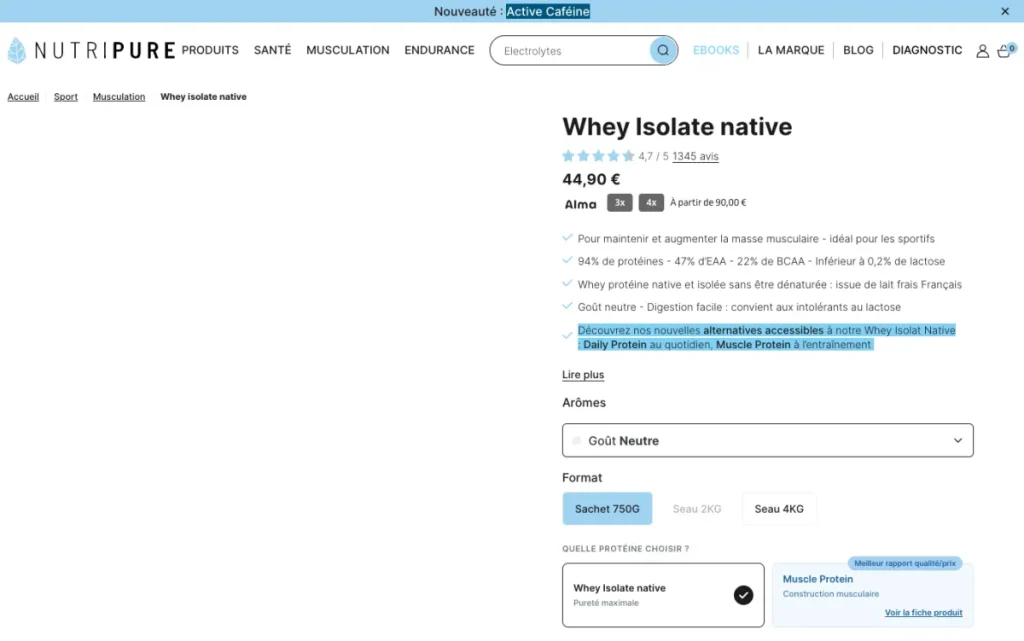
This is the best balance of purity, formula and price in our comparison. In the unflavoured version the ingredient list fits on one line: whey protein isolate from French milk, plus sunflower lecithin. A 30 g serving brings 26 g of protein for 115 kcal, with 0.2 g of lactose per 100 g.
- ✅ No sweetener and no flavouring in the unflavoured version, five flavours to choose from
- ✅ Around €47 a kilo (checked in October 2026), cheaper than the other native isolates
- ❌ 86.8 g of protein as sold: a notch below Nutri&Co and AM Nutrition
2. AM Nutrition Pure Whey Isolate: the simplest
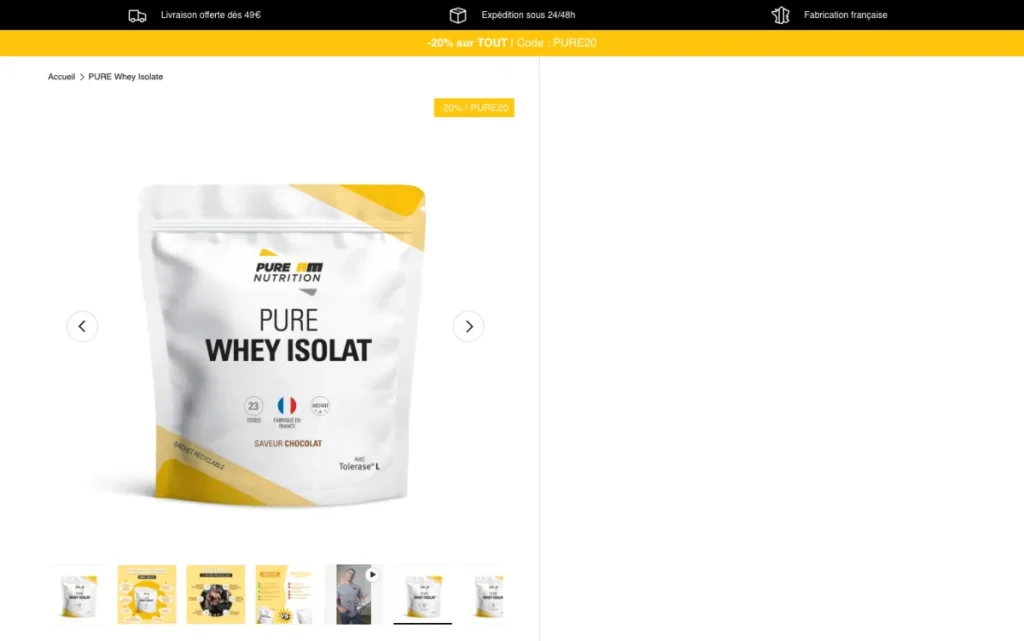
Unflavoured, this is the shortest formula in the comparison: 100% isolate, no additives at all, 91 g of protein per 100 g and 380 kcal. The flavoured versions add sucralose and a lactase, and drop to 81 to 86 g of protein depending on the flavour. Budget around €61 a kilo (checked in October 2026).
👉 Our full AM Nutrition review: range, price per kilo, customer ratings and a comparison with Nutripure.
3. Nutri&Co Whey Isolate Native: the most concentrated
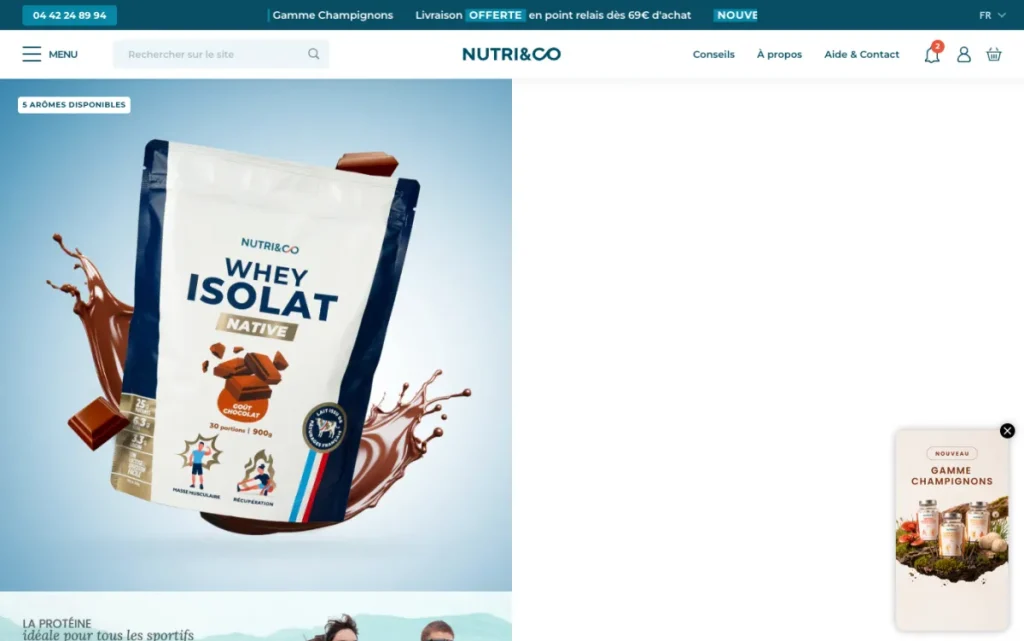
At 92 g of protein per 100 g as sold, this is the highest content in the table, for 113 kcal and 0 g of sugars per 30 g serving. The milk comes from French cows and the lactose is declared at under 0.02%. Its weak point is the price: around €67 a kilo (checked in October 2026), which is roughly 40% more than Nutripure.
4. Nutrimuscle Whey Native Isolate: the benchmark for advanced lifters
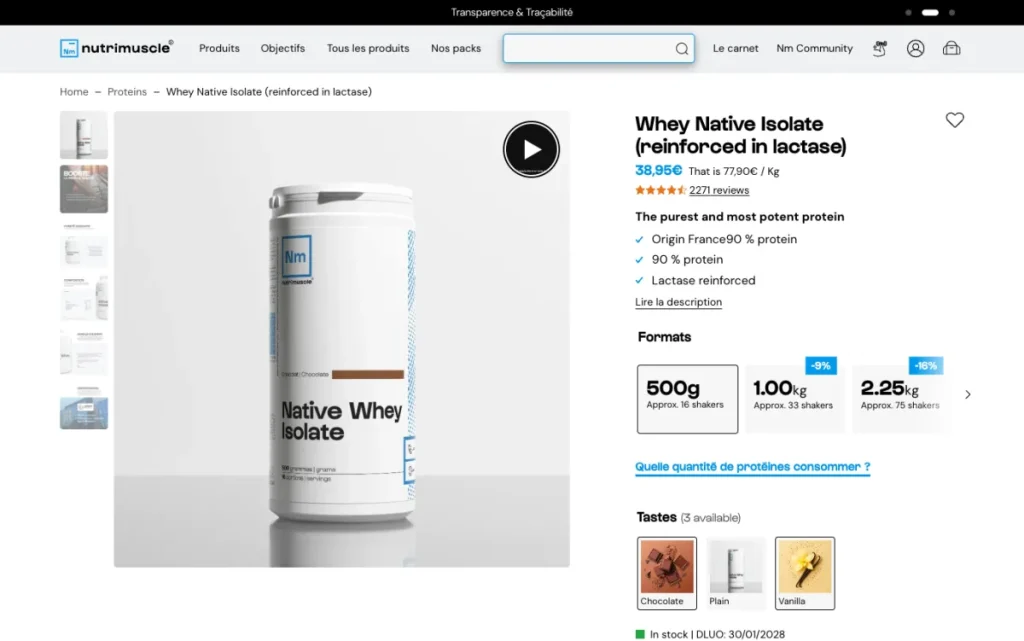
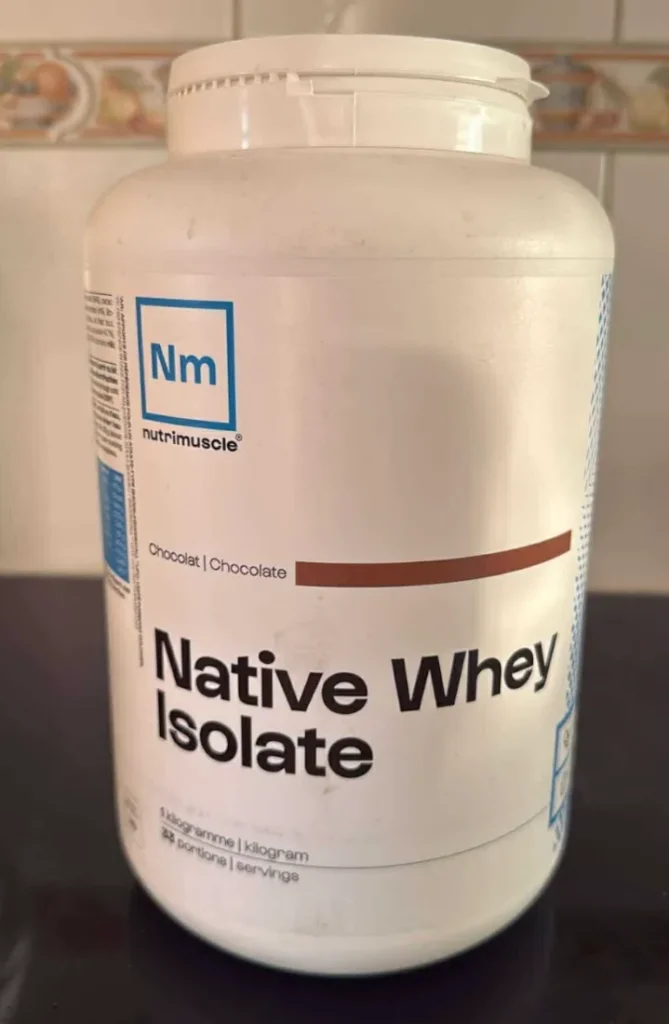
A French native isolate made with traceable milk (Ingredia), carrying 85.5 g of protein in its plain version and 370 kcal per 100 g. The flavoured versions are sweetened with sucralose. The price depends a great deal on the pack size: €70.95 a kilo for a 1 kg tub, around €62 a kilo in 4 kg.
5. BioTechUSA Iso Whey Zero: the most widely sold flavoured isolate
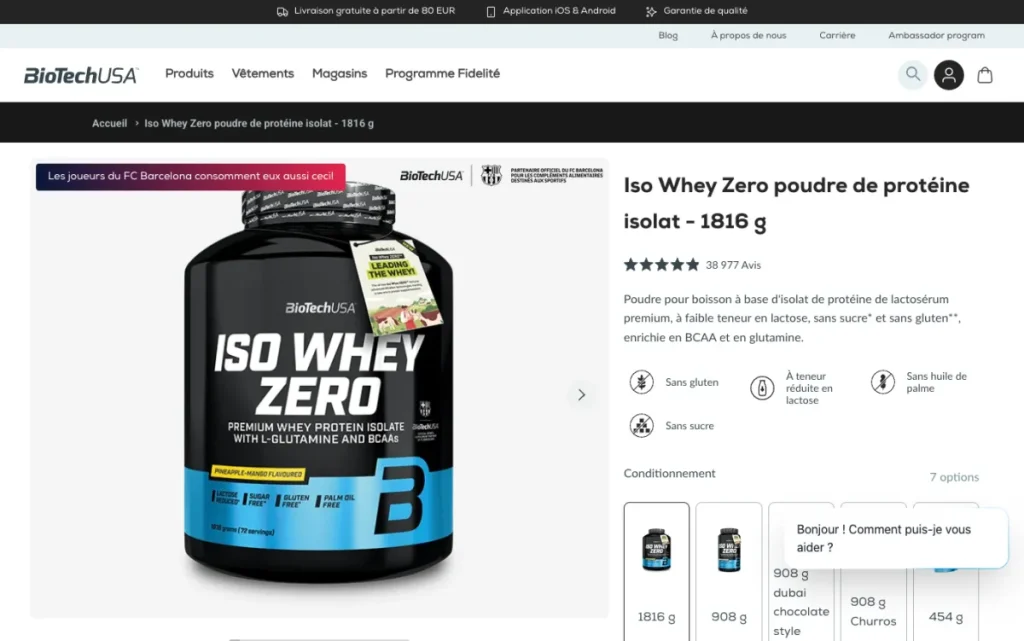
85 g of protein and 366 kcal per 100 g, with a very wide choice of flavours (16 of them on the official shop). The trade-off is a formula containing sucralose, flavourings and, in some flavours, colourings such as tartrazine. The 1.816 kg tub works out at €57.76 a kilo (checked in October 2026).
6. MyProtein Impact Whey: the cheapest of the big brands
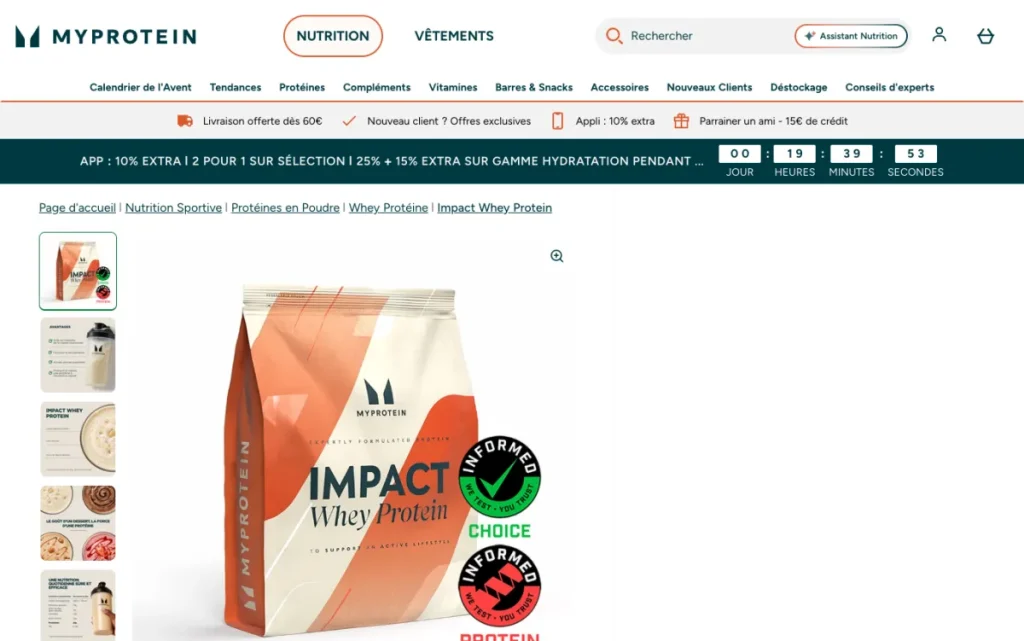
A whey concentrate at 72 g of protein per 100 g, sold at around €38 a kilo on offer (checked in October 2026). A 30 g serving brings 22 g of protein for 114 kcal. It is a good pick if budget comes first and you digest milk well; you pay less, but you are also buying less protein per kilo and more sweetener (sucralose).
7. Optimum Nutrition Gold Standard: the best known in the world
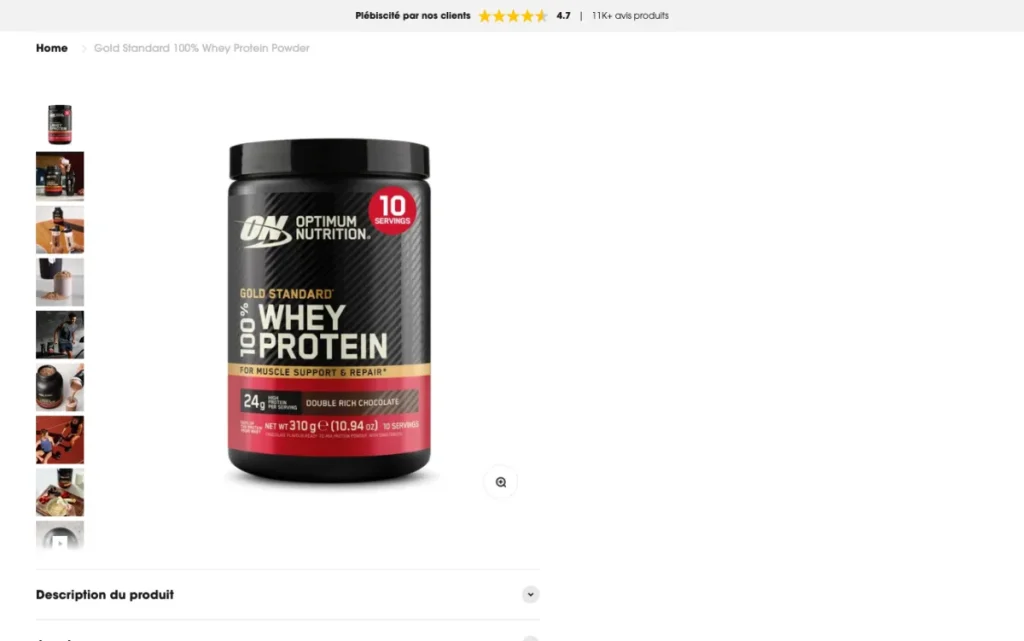
A blend of isolate, concentrate and hydrolysate that lists 76 g of protein per 100 g and 24 g per 31 g scoop. Its fame rests mainly on the number of flavours and on the fact you can buy it anywhere. On the label it stacks up two sweeteners (sucralose and acesulfame K) plus soya lecithin, for around €43 a kilo (checked in October 2026).
Scitec 100% Whey Protein Professional and nu3 Performance Whey round out the table: two concentrates at around 73 to 74 g of protein per 100 g, appealing on price (around €33 a kilo in 4 kg for Scitec, around €40 for nu3), but with longer additive lists (two sweeteners and enzymes for Scitec, gums and silicon dioxide for nu3).
🎯 The best whey for your goal
There is no single best whey for everyone, only a best whey for your goal and your budget. Here are our quick picks, each one worked through in a dedicated comparison:
- You are just starting out: an unflavoured whey that is easy to measure out (Nutripure), or a concentrate if you digest milk well. Our pick of the best whey protein for beginners also looks at Decathlon.
- You want to put on size: a whey is a protein top-up, not a calorie top-up. Our comparison of the best whey protein for bulking works out the cost per serving and weighs whey against a mass gainer.
- You want to lose weight: aim for the most protein for the fewest calories (Nutri&Co, AM Nutrition, Nutripure). The detail is in our ranking of the best whey protein for weight loss.
- Milk leaves you bloated: go for an isolate (Nutri&Co, Nutripure). Our ranking of the best whey isolate compares six of them.
- You are on a tight budget: Scitec in 4 kg or MyProtein on offer, accepting less protein per kilo.
- You want zero sweetener: Nutripure or AM Nutrition unflavoured, and you add the flavour yourself.
Still torn between concentrate, isolate, native and hydrolysed? Our guide to which whey protein to choose helps you decide by type of whey, and our comparison of the best whey protein brands looks at the brands rather than the products.
🧪 How to spot a good whey, in 3 criteria
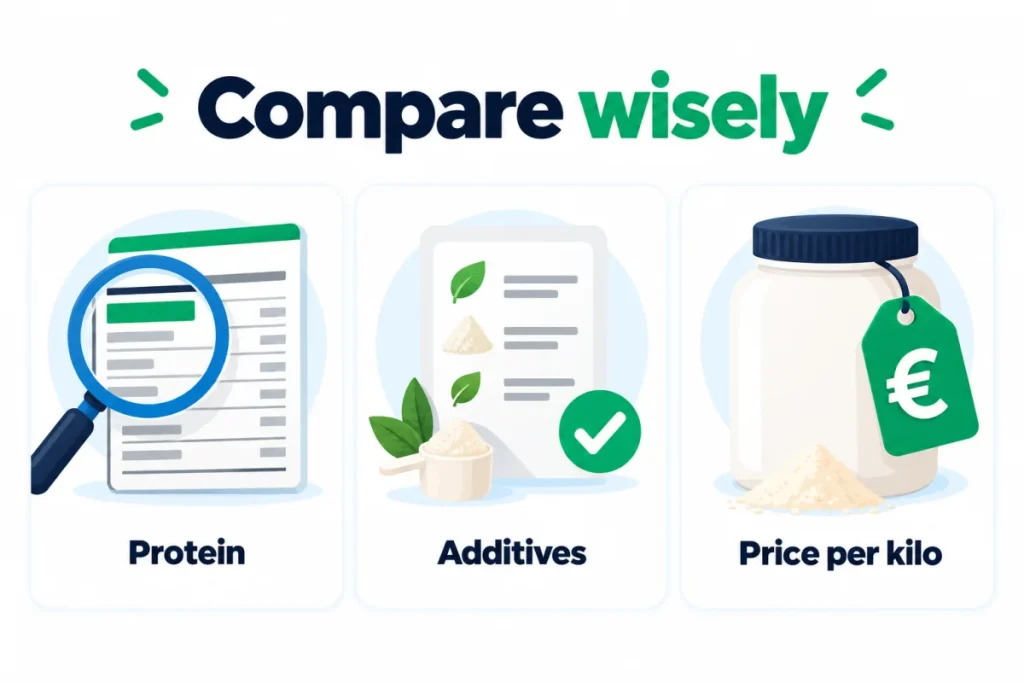
- Protein per 100 g as sold: at least 80 g for an isolate, around 70 to 76 g for a concentrate. Be wary of “dry matter” percentages.
- A short ingredient list: whey first, then as few additives as possible. Our guide to whey protein composition explains how to read the label.
- Price per kilo, not price per tub: pack sizes run from 750 g to 4 kg, and the price per kilo drops by 20 to 35% on the big formats at Nutripure or Scitec.
The dose matters more than the brand. The ISSN reckons 1.4 to 2.0 g of protein per kg of bodyweight per day is enough for most active people, with 20 to 40 g per serving, and a meta-analysis of 49 trials sees no further lean mass gain beyond roughly 1.6 g/kg/day. To work out your own amount, read our guide to how much whey protein per day.
💬 Our verdict on the best whey protein
If you are only buying one, buy a native isolate in the unflavoured version: it is the most versatile format (shaker, porridge, baking) and the easiest to digest. On that measure Nutripure wins on price, Nutri&Co on protein content and AM Nutrition on simplicity. We put Nutripure first because the protein gap with Nutri&Co (about 5 g per 100 g) does not, to our eyes, justify €20 more per kilo.
This ranking is not for you if what you want above all is the taste of a milkshake: unflavoured wheys taste faintly of milk, and the mass-market brands (Optimum Nutrition, BioTechUSA, MyProtein) offer far more flavours. It is no use either if your diet already covers your protein needs: in that case, no whey is essential.
⚠️ Watch out
Ask a doctor before taking whey if you have kidney or liver disease, if you are pregnant or breastfeeding, or if the person taking it is a teenager. An isolate helps if you are lactose intolerant, but not if you are allergic to milk protein. ANSES also advises buying through controlled channels: our guide to where to buy whey protein sets out the options, and our file on the dangers of whey goes through the real risks.
❓ Frequently asked questions
Which whey protein is the most effective?
At an equal protein dose, every whey stimulates muscle building to a comparable degree. What changes from one brand to the next is the amount of protein per serving, the additives and the price. Effectiveness comes down above all to your total protein intake across the day and to your training.
What are the 10 best whey proteins?
Our 2026 ranking keeps nine of them, the ones whose official product sheets we could verify: Nutripure, AM Nutrition, Nutri&Co, Nutrimuscle, BioTechUSA, MyProtein, Scitec, Optimum Nutrition and nu3. We dropped the products whose formula or price we could not check.
What is the best protein powder?
For most people who train, a whey isolate is still the best protein powder: high in protein, low in lactose and low in calories. Plant proteins (pea, rice) are the right option if you avoid dairy or if you are allergic to milk protein.
How can you tell whether a whey is good quality?
Look at three lines on the label: protein per 100 g as sold, the ingredient list and the origin of the milk. A good whey shows at least 70 g (concentrate) or 80 g (isolate) of protein, few additives and clear traceability. A certification to the NF V94-001 standard (now EN 17444) is a bonus.